

Dolce puts adjustability at the centre of the purchase. That is useful until you realise that “adjustable” describes only one part of what you want. You might be looking for two contact points with a different relationship, easier handheld control, a wearable for partnered use, or a connected device with a completely different mechanism. Those searches lead to different alternatives.
Our shortlist starts with SVIBE Snail Curve for its rolling external contact design, followed by Unbound Bender for a flexible handheld approach. We-Vibe Chorus, Nova 2, Lovense Nora, SVAKOM CICI+ 2 and Dame Eva cover the other meaningful directions. Some preserve dual stimulation; others deliberately simplify it. None should be mistaken for a carbon copy of Dolce.
Seven routes away from Dolce
| Pick | Alternative | The reason to investigate |
|---|---|---|
| 1 | SVIBE Snail Curve | Change the external contact geometry |
| 2 | Unbound Bender | Use a flexible handheld form |
| 3 | We-Vibe Chorus | Make partnered control the priority |
| 4 | We-Vibe Nova 2 | Return to a handled rabbit format |
| 5 | Lovense Nora | Introduce a rotating internal head |
| 6 | SVAKOM CICI+ 2 | Consider a slimmer connected rabbit |
| 7 | Dame Eva | Move to external wearable stimulation |
What each change from Dolce costs
An adjustable shape and a lower price answer different questions. This table keeps placement, controls and build details side by side.
| Product | Listed price | Key specifications | Controls | Build quality: materials & protection | Power & charging |
|---|---|---|---|---|---|
| Lovense Dolce (reference) | US$119 sale; listed US$239 | Adjustable dual-ended design | Device + Lovense app | IPX7; 1-year warranty | 1–2 h stated use |
| 1. SVIBE Snail Curve | US$139 sale; listed US$278 | Dual motors; rolling external head | Separate motor controls | Silicone; 2-year warranty | ~1 h use; ~2 h charge |
| 2. Unbound Bender | US$49.70 sale; listed US$71 | 7 in total; 3.5 in max circumference | 10 settings/patterns; single button | Silicone; 3 ft / 30 min submersion | ~2 h use; 1 h charge |
| 3. We-Vibe Chorus | From US$159 sale; listed US$219 | Adjustable dual couples format | Squeeze remote + app | Silicone + ABS; 2-year warranty | Rechargeable |
| 4. We-Vibe Nova 2 | From US$129 sale; listed US$159 | Adjustable internal arm; flexible external arm | Device + We-Vibe app | IPX7; 2-year warranty | Rechargeable |
| 5. Lovense Nora | US$99 sale; listed US$199 | Rotating head + external vibration | Device + Lovense app | IPX6 water-resistant; 1-year warranty | 3.5–4 h stated use |
| 6. SVAKOM CICI+ 2 | US$89 | 9 cm insertable; 2 cm insertable width | 5 vibration modes + heating | Liquid silicone; IPX7; 2-year warranty | 1 h use; 2 h charge |
| 7. Dame Eva | US$129 | 2.4 in overall width including wings | 3 intensities; device control | Silicone; waterproof; 3-year warranty | 1 h at highest; 4 h charge |
Listed item prices checked 9 November 2026; USD unless marked EUR. Shipping and checkout taxes are separate. Specifications and warranty terms are manufacturer-stated.
Decide what the bend is supposed to solve
Before replacing Dolce, describe why its adjustable format interested you. Was it the possibility of changing the angle? The absence of a conventional long handle? The combination of internal and external stimulation? Or simply that it looked less cumbersome than another device?
That answer should survive the comparison. If adjustable geometry was the attraction, a rigid product needs another convincing advantage to displace it. If the real attraction was app control, a different connected format could make sense even without resembling Dolce. If you wanted external stimulation without holding anything, an external wearable may answer the brief more directly than another dual device.
A useful way to organise the decision is to separate three jobs: positioning the product, controlling it and removing it. A device that changes one of those jobs can change the whole experience of ownership. The product photograph mainly shows positioning; the manual is often more useful for understanding the other two.
1. SVIBE Snail Curve — a more defined contact design

Snail Curve combines an internal section with a rounded, textured external head designed to roll with movement. Its two motors have separate controls. Rather than making adjustment the main selling point, its shape gives you a particular relationship between the two stimulation areas.
That makes Curve interesting if Dolce appealed because you wanted both areas addressed by one object, but you are less attached to the adjustable configuration itself. The comparison becomes about whether a more defined contact design is preferable to choosing your own angle.
Look closely at the space around the external head and where your hand would sit. Those details matter more here than a generic description such as “dual vibrator.” A rolling head, a narrow flexible arm and a palm-shaped external section are three different ways of constructing that second contact point.
Separate motor control is relevant for another reason: the ideal internal setting may not be the ideal external setting. The ability to change them independently is a practical distinction, whereas an impressive total number of combinations tells you little about how easily you can reach the desired arrangement.
Curve is the first option to examine if you want to replace adjustable geometry with a distinctive moving contact design. Keep Dolce in contention if setting the angle yourself remains the feature you care about most; the two designs answer different positioning preferences.
2. Unbound Bender — flexibility without the same dual architecture
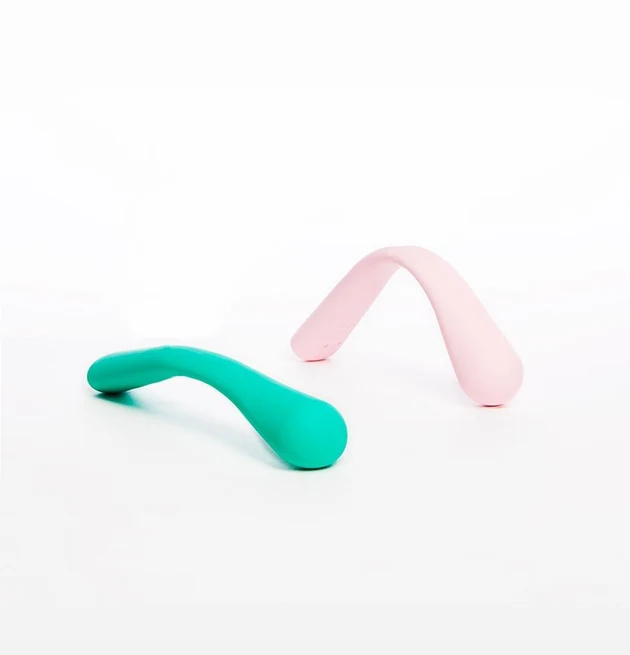
Unbound Bender is a flexible personal massager. Its relevance is the ability to change a handheld shape rather than reproduce Dolce's two-ended arrangement. It offers a different answer to a buyer whose main interest was adaptability.
Think of Bender as a way to simplify the comparison. Instead of aligning two distinct ends at once, you choose how to position a flexible device for the use you want. That can be appealing if the complexity of a dual arrangement has become the problem rather than the solution.
The limitation follows directly from the same design decision: a flexible handheld device is not automatically a substitute for every purpose of an adjustable dual vibrator. If two separate stimulation areas are essential, make that requirement explicit before allowing a flexible appearance to settle the purchase.
Compare the permitted adjustment shown in Unbound's instructions with the form you actually intend to use. “Flexible” should not become a licence to bend any part in any direction. Its practical value comes from the adjustments the model is designed to support.
Bender is particularly worth considering when you want a versatile object without keeping the same architecture as Dolce. It is a less direct match when the two-end configuration, rather than flexibility itself, is your reason for shopping.
3. We-Vibe Chorus — put partnered control at the centre

We-Vibe Chorus combines an adjustable couples format with a squeeze-responsive remote. That control method gives it a specific reason to appear beside Dolce: one person can alter intensity through pressure on the controller, rather than making every adjustment through a phone interface.
This matters when your intended use involves sharing control in the same room. Consider where the remote would be kept, who would reach it and whether its interaction makes sense to both people. A controller is part of the product's physical design, not merely an extra in the box.
Chorus also changes the fit discussion. Its couples-oriented arrangement deserves to be assessed as a wearable configuration, not as a shorter version of a handled rabbit. Compare the relationship between the internal and external portions before deciding that both products belong on the same final shortlist.
If your reason for considering Dolce was mainly solo adjustment, the squeeze remote may be incidental. If shared control was central, it becomes a much stronger reason to investigate Chorus. This is a useful example of a feature becoming valuable only when it matches a real plan.
Keep this comparison specific to Chorus. Chorus Pro is a separate product name, and a retailer's combined brand page can blur which controls or accessories belong to which version.
4. We-Vibe Nova 2 — bring back the handle
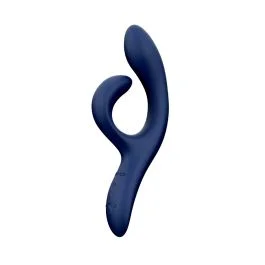
Nova 2 offers a rabbit format with an internal section, an external arm and a handle. The reason to compare it with Dolce is straightforward: you may prefer being able to direct the whole device from a more conventional grip.
A handle creates a visible point of control over orientation. That is valuable to investigate if you disliked the idea of reaching around a compact device to reposition it. It also changes where physical buttons can sit and how much of the product remains available to hold.
The trade-off is that a larger handled format may not be what you wanted from Dolce in the first place. Someone prioritising a compact adjustable object should not switch purely because Nova 2 has a familiar silhouette. Compare the complete outline, including the handle, against your storage and handling preferences.
Nova 2 belongs in a different branch of this decision from Bender. Bender invites a simpler flexible approach; Nova 2 keeps the rabbit's dual structure and changes how it is held. Working out which branch appeals will eliminate more options than comparing pattern counts.
For a closer look at those shape differences, our guide to premium device features explains why measurements and controls deserve separate columns in a comparison.
5. Lovense Nora — when you actually want rotation
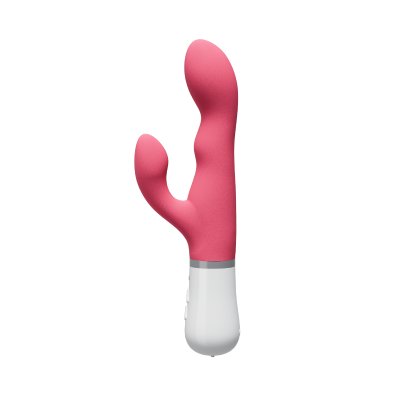
Nora brings a rotating internal head and an external vibrating arm to the shortlist. Remaining within Lovense does not make it a minor variation on Dolce: the mechanical difference is the point.
This is the right comparison if you have realised that adjustable shape was not your main interest after all. Perhaps what you wanted was an additional kind of movement, rather than a different angle. Nora lets you evaluate that requirement explicitly.
Do not confuse rotation with thrusting or vibration. They describe different actions. A product can have multiple functions without performing all three, and similar-looking marketing animations can make the distinction less obvious than it should be.
Because Nora and Dolce sit within the same brand ecosystem, it is tempting to spend the entire comparison on software. Start with the hardware instead. A shared app cannot make an adjustable two-ended device physically behave like a rabbit with a rotating head.
Nora makes the strongest sense when rotation is a feature you actively want to explore. If you would leave that function off most of the time, investigate the shape and controls of the other candidates before treating it as a reason to switch. Buying an extra mechanism is most useful when it answers a preference you can name.
6. SVAKOM CICI+ 2 — narrow the physical format
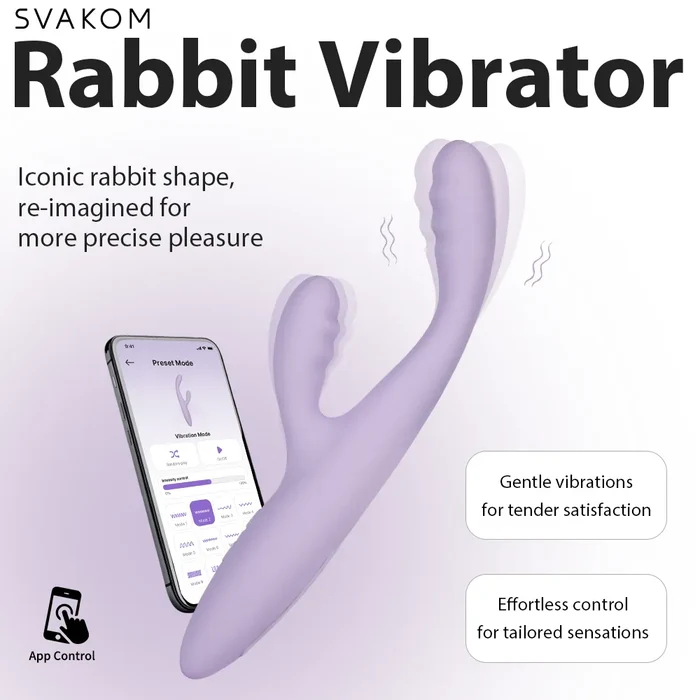
CICI+ 2 is a connected slim rabbit. SVAKOM lists an insertable section measuring 90 by 20 millimetres, alongside app control and independently operated heating. Its dimensions give you something concrete to compare with the compactness you may have associated with Dolce.
This option is about separating narrowness from adjustability. A device can be adjustable without being narrow, or narrow without offering the same adjustment. If dimensions are the real priority, moving to a slim rabbit can be more relevant than searching only for devices that bend.
The heating function should be treated as a separate purchase consideration. It does not establish that the shape will suit you, and it need not be the reason for choosing this model. Check how the function is operated if it matters to your decision.
CICI+ 2 also keeps connected control in the picture while changing the physical arrangement. That makes it a useful candidate when you want app features but are open to abandoning Dolce's silhouette.
Be precise about the name when comparing listings. The original CICI and CICI+ 2 should not be combined into one specification sheet. The plus sign and generation number are necessary identifiers, particularly when checking the photographs and included charging equipment.
7. Dame Eva — remove the internal component from the brief
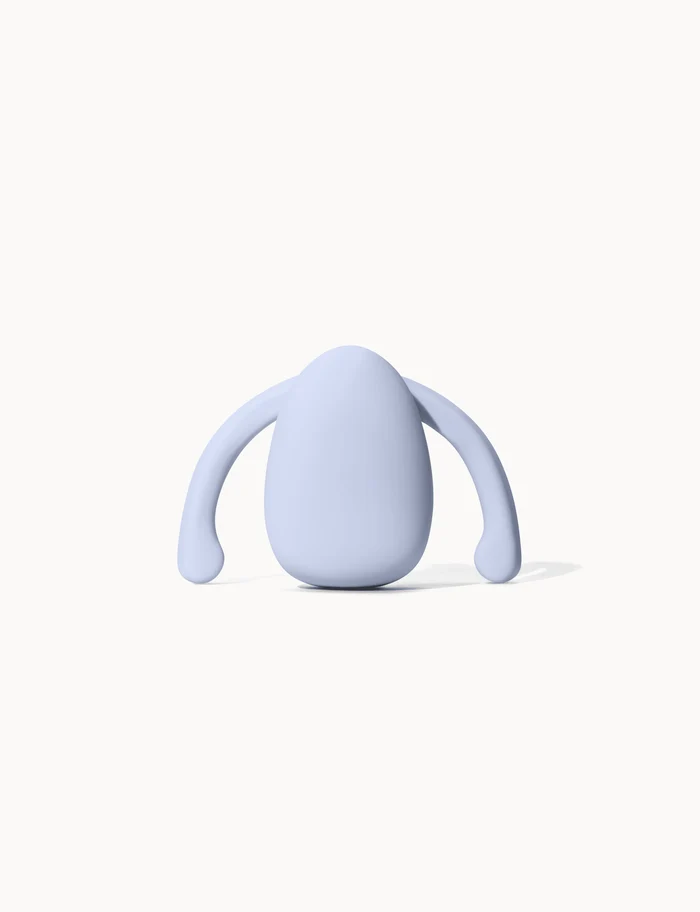
Dame Eva is an external wearable vibrator with flexible wings. It takes this shortlist in a different direction: instead of finding another way to align internal and external stimulation, it lets you consider whether the internal component is needed at all.
That question is especially useful when your interest in Dolce came from partnered use. “For couples” includes several very different products. A ring, a C-shaped dual device and a winged external wearable do not attach to the body in the same way or leave the same space around them.
Eva deserves attention when external stimulation and reduced handheld involvement are the main goals. Its placement is the essential thing to understand. A wearable description does not mean that one fit or position works identically for everyone, and the wings are a specific retention design rather than decoration.
Compared with Nora or Nova 2, Eva also narrows the purpose of the device. That can be a good purchasing decision if you have been comparing complex products for a much simpler intended use.
Keep Eva off the final shortlist if retaining a dual internal/external configuration is non-negotiable. Include it when the comparison has revealed that you mainly wanted an external wearable and had been using Dolce as a starting point rather than an exact specification.
Three practical shortlists, depending on your reason for leaving Dolce
For shape adjustment, start with Bender and Nova 2, while keeping Curve as the candidate for a deliberately different contact arrangement. Their differences are visible and mechanical; they are not three versions of the same compact device.
For partnered control, compare Chorus with Eva. The contrast will clarify whether you want a dual wearable controlled remotely or an external wearable with a different retention design. Add Dolce back into that comparison only if its adjustable dual configuration still serves the intended use.
For a new mechanism, compare Nora with Curve. Rotation and rolling external contact address different parts of the design. Choosing between them is more meaningful than assuming that both are upgrades because they look unusual.
Once two candidates remain, make a small ownership list: device, charger, controller where applicable, storage case and instructions. Our storage guide is useful for keeping those items associated with the correct model. A compact device with several accessories may require more organisation than its product photograph suggests.
Finally, compare how you would change a setting without changing the position. That single practical question brings the geometry, controls and grip together. It is often the clearest way to decide whether you really want another adjustable dual device or a different format altogether.